
IMMUNOTHERAPY Program for Breast Cancer Patients.
 10/10/2025 - 30/09/2027
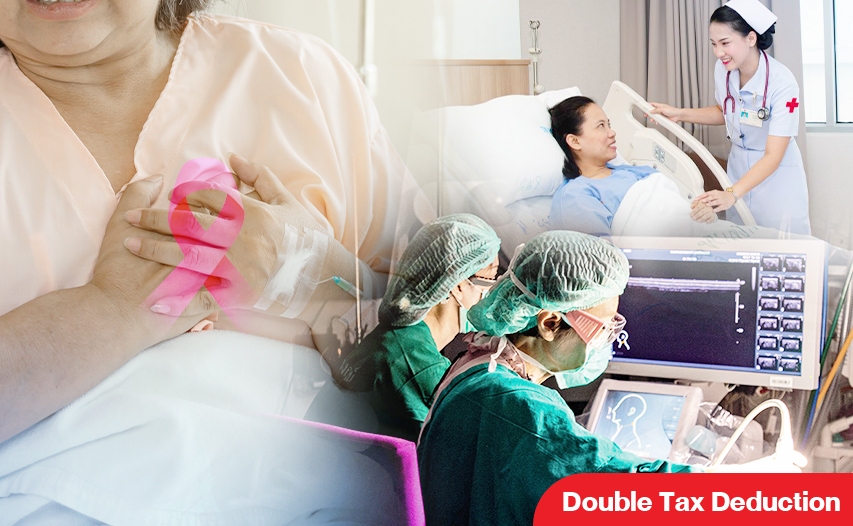


Breast Cancer: Hope and the Power of Immunotherapy
"Breast
Cancer" – two short words that instill fear
and change the lives of millions.
The
incidence of breast cancer in Thailand is increasing every year, with over 22,158
new patients diagnosed annually. The number of patients undergoing breast
cancer treatment—including surgery, chemotherapy, and radiation therapy—is
continually rising.
Recognizing
this critical need, Dr. Kris Chatamra, a specialist cancer surgeon, initiated
the establishment of the Queen Sirikit Centre for Breast Cancer (QSCBC),
following the royal command of Her Majesty Queen Sirikit The Queen Mother:
"I
wish this Centre to be a refuge for women."
Furthermore,
Her Majesty showed immeasurable compassion by graciously donating 2 million
Baht of her personal funds to establish the center, taking it under her
royal patronage, and bestowing the name "Queen Sirikit Centre for
Breast Cancer" on June 11, B.E. 2548 (2005).
Every
patient at the QSCBC is assigned a dedicated Consulting Nurse to provide advice
and encouragement from the initial check-up, explain the treatment procedures,
and offer continuous follow-up and care throughout every step of the treatment
process.
The New Hope: Immunotherapy
Currently,
while various methods like surgery, chemotherapy, radiation therapy, or
anti-hormone drugs can prolong a patient's life, for some, the nightmare is not
over: cancer may recur, often accompanied by side effects that severely
diminish their quality of life.
IMMUNOTHERAPY:
A New Hope for Cancer Treatment
"Immunotherapy" offers an alternative cancer treatment option by utilizing
the body's fundamental immune cells—the most abundant cells in the body—to
stimulate the T-cells (the immune system) and direct them to eliminate cancer
cells.
The
treatment results from the first patient treated at the QSCBC, Chulalongkorn
Hospital, Thai Red Cross Society, showed that the cancer cells in the patient's
body were reduced to zero.
The
patient experienced minimal side effects and a clear improvement in her quality
of life, reaffirming the truth that "Breast cancer: early detection and
early treatment provide an over 90% chance of recovery."
Assoc.
Prof. Dr. Kris Chatamra, Head of the Queen Sirikit Centre for Breast Cancer,
Chulalongkorn Hospital, Thai Red Cross Society, conducted research and
treatment planning that led to the discovery of this new approach: breast
cancer treatment using immunotherapy. This method utilizes the body's basic
immune cells, particularly the T-cells, which act as soldiers in the fight
against cancer cells.
Currently,
the Centre uses immune cell therapy for patients with advanced or
difficult-to-treat breast cancer, especially those whose cancer remains after
other treatments or who sought treatment late.
During
the second injection of immune cells, when the immune system begins to destroy
the cancer cells, some patients may experience minor side effects, such as
fatigue, loss of appetite, joint pain, or clear blisters. These symptoms are
temporary and short-lived.
After
6 months of treatment, the patient's condition continuously improved: she was
not fatigued, no fluid was found in her lungs, her bone pain disappeared, and
she no longer needed painkillers. The patient was able to return to a normal
life.
The
key advantage of this treatment is that immune cells can reach all parts of
the body, including the brain, which chemotherapy cannot achieve.
Following
the successful treatment of the first patient, the QSCBC has introduced
immunotherapy to treat other breast cancer patients and anticipates that it can
reduce the treatment cost by one-third compared to the first patient's
cost, which will also be less expensive than chemotherapy treatment.
">
Breast Cancer: Hope and the Power of Immunotherapy
"Breast
Cancer" – two short words that instill fear
and change the lives of millions.
The
incidence of breast cancer in Thailand is increasing every year, with over 22,158
new patients diagnosed annually. The number of patients undergoing breast
cancer treatment—including surgery, chemotherapy, and radiation therapy—is
continually rising.
Recognizing
this critical need, Dr. Kris Chatamra, a specialist cancer surgeon, initiated
the establishment of the Queen Sirikit Centre for Breast Cancer (QSCBC),
following the royal command of Her Majesty Queen Sirikit The Queen Mother:
"I
wish this Centre to be a refuge for women."
Furthermore,
Her Majesty showed immeasurable compassion by graciously donating 2 million
Baht of her personal funds to establish the center, taking it under her
royal patronage, and bestowing the name "Queen Sirikit Centre for
Breast Cancer" on June 11, B.E. 2548 (2005).
Every
patient at the QSCBC is assigned a dedicated Consulting Nurse to provide advice
and encouragement from the initial check-up, explain the treatment procedures,
and offer continuous follow-up and care throughout every step of the treatment
process.
The New Hope: Immunotherapy
Currently,
while various methods like surgery, chemotherapy, radiation therapy, or
anti-hormone drugs can prolong a patient's life, for some, the nightmare is not
over: cancer may recur, often accompanied by side effects that severely
diminish their quality of life.
IMMUNOTHERAPY:
A New Hope for Cancer Treatment
"Immunotherapy" offers an alternative cancer treatment option by utilizing
the body's fundamental immune cells—the most abundant cells in the body—to
stimulate the T-cells (the immune system) and direct them to eliminate cancer
cells.
The
treatment results from the first patient treated at the QSCBC, Chulalongkorn
Hospital, Thai Red Cross Society, showed that the cancer cells in the patient's
body were reduced to zero.
The
patient experienced minimal side effects and a clear improvement in her quality
of life, reaffirming the truth that "Breast cancer: early detection and
early treatment provide an over 90% chance of recovery."
Assoc.
Prof. Dr. Kris Chatamra, Head of the Queen Sirikit Centre for Breast Cancer,
Chulalongkorn Hospital, Thai Red Cross Society, conducted research and
treatment planning that led to the discovery of this new approach: breast
cancer treatment using immunotherapy. This method utilizes the body's basic
immune cells, particularly the T-cells, which act as soldiers in the fight
against cancer cells.
Currently,
the Centre uses immune cell therapy for patients with advanced or
difficult-to-treat breast cancer, especially those whose cancer remains after
other treatments or who sought treatment late.
During
the second injection of immune cells, when the immune system begins to destroy
the cancer cells, some patients may experience minor side effects, such as
fatigue, loss of appetite, joint pain, or clear blisters. These symptoms are
temporary and short-lived.
After
6 months of treatment, the patient's condition continuously improved: she was
not fatigued, no fluid was found in her lungs, her bone pain disappeared, and
she no longer needed painkillers. The patient was able to return to a normal
life.
The
key advantage of this treatment is that immune cells can reach all parts of
the body, including the brain, which chemotherapy cannot achieve.
Following
the successful treatment of the first patient, the QSCBC has introduced
immunotherapy to treat other breast cancer patients and anticipates that it can
reduce the treatment cost by one-third compared to the first patient's
cost, which will also be less expensive than chemotherapy treatment.
 1,284
1,284
 350 day