
Urodynamic System for Bladder Dysfunction Patients
 24/10/2025 - 23/10/2026
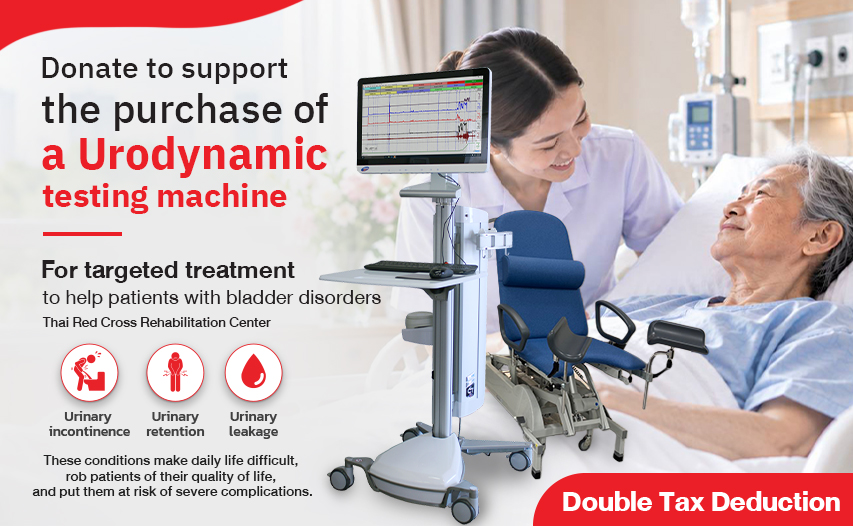


Patients
with neuromuscular disorders and elderly individuals often face a problem they
are reluctant to discuss: "incontinence" (inability to hold urine) or
"urinary retention" (inability to pass urine).
This
seemingly minor dysfunction is a major barrier that hinders happiness and
causes the rehabilitation of other bodily functions to stall, as patients are
constantly worried about controlling their urinary excretion.
Patients
with neuromuscular disorders and elderly individuals with dysfunctional urinary
excretion systems require assessment to analyze their urinary system. This is
crucial for patients with abnormal urination to obtain data for evaluating the
dysfunction, making a diagnosis, providing treatment, planning, and monitoring
treatment outcomes.
What is Urodynamic Testing?
Urodynamic
testing (Urodynamics) is a procedure that examines the function of the entire
urinary tract, from the bladder to the urethra. It analyzes:
·
The
contraction of the bladder muscle and sphincter muscle.
·
The
bladder's ability to store urine.
·
Urinary
control (continence).
·
The
condition of urine leakage when straining.
This
test is performed on patients who exhibit symptoms such as urinary
incontinence, frequent urinary tract infections (UTIs), abnormal control of
urination, incomplete bladder emptying, or difficulty straining to urinate.
The Need for New Equipment
Thai
Red Cross Rehabilitation Center is a specialized center of Thai Red Cross
Society that provides treatment, therapy, and rehabilitation for patients with
physical impairments or disabilities, such as those recovering from stroke,
brain or spinal cord injuries, or those experiencing physical decline due to
various chronic diseases. These conditions severely impact their capability and
quality of life.
In
line with its mission to provide standard-compliant rehabilitation services for
patients and disabled persons, focusing on patient-centered care and
modernizing the field of rehabilitation medicine to create a better quality of
life for patients, Thai Red Cross Rehabilitation Center currently provides
urinary tract function assessments to more than 20 patients per month.
Therefore, there is an urgent need to procure a new Urodynamic analysis machine to replace the damaged existing unit and to prepare for the increasing volume of elderly patients with urinary excretion problems. This will ensure that patients receive timely analysis, diagnosis, and treatment.
Objectives
1.
To
be used for analyzing the urinary system function in the elderly and patients
with urinary tract dysfunction, in order to obtain data for evaluating the
abnormality in diagnosis, treatment planning, and monitoring treatment
outcomes.
2.
To
be used in teaching and training medical students and residents in
Rehabilitation Center.
3. To develop research projects aligned with patient rehabilitation.
Target Group
·
The
elderly
·
Stroke
patients
·
Patients
with brain injury
· Patients with spinal cord injury
Benefits of the X-ray Machine for Rehabilitation Medicine
Patients (Assuming the Urodynamic machine includes X-ray/Fluoroscopy
capability)
1.
To
detect urinary system abnormalities in patients with urinary tract dysfunction,
thereby providing data for evaluating the abnormality in diagnosis, treatment
planning, and monitoring treatment outcomes.
2.
To
detect complications within the urinary system.
3. To monitor changes in the urinary system function, which helps physicians track disease progression and adjust treatment promptly.
Budget
Procurement of one (1) Urodynamic System (Bladder Function Analysis Machine), totaling 5,500,000 Baht.
">Patients
with neuromuscular disorders and elderly individuals often face a problem they
are reluctant to discuss: "incontinence" (inability to hold urine) or
"urinary retention" (inability to pass urine).
This
seemingly minor dysfunction is a major barrier that hinders happiness and
causes the rehabilitation of other bodily functions to stall, as patients are
constantly worried about controlling their urinary excretion.
Patients
with neuromuscular disorders and elderly individuals with dysfunctional urinary
excretion systems require assessment to analyze their urinary system. This is
crucial for patients with abnormal urination to obtain data for evaluating the
dysfunction, making a diagnosis, providing treatment, planning, and monitoring
treatment outcomes.
What is Urodynamic Testing?
Urodynamic
testing (Urodynamics) is a procedure that examines the function of the entire
urinary tract, from the bladder to the urethra. It analyzes:
·
The
contraction of the bladder muscle and sphincter muscle.
·
The
bladder's ability to store urine.
·
Urinary
control (continence).
·
The
condition of urine leakage when straining.
This
test is performed on patients who exhibit symptoms such as urinary
incontinence, frequent urinary tract infections (UTIs), abnormal control of
urination, incomplete bladder emptying, or difficulty straining to urinate.
The Need for New Equipment
Thai
Red Cross Rehabilitation Center is a specialized center of Thai Red Cross
Society that provides treatment, therapy, and rehabilitation for patients with
physical impairments or disabilities, such as those recovering from stroke,
brain or spinal cord injuries, or those experiencing physical decline due to
various chronic diseases. These conditions severely impact their capability and
quality of life.
In
line with its mission to provide standard-compliant rehabilitation services for
patients and disabled persons, focusing on patient-centered care and
modernizing the field of rehabilitation medicine to create a better quality of
life for patients, Thai Red Cross Rehabilitation Center currently provides
urinary tract function assessments to more than 20 patients per month.
Therefore, there is an urgent need to procure a new Urodynamic analysis machine to replace the damaged existing unit and to prepare for the increasing volume of elderly patients with urinary excretion problems. This will ensure that patients receive timely analysis, diagnosis, and treatment.
Objectives
1.
To
be used for analyzing the urinary system function in the elderly and patients
with urinary tract dysfunction, in order to obtain data for evaluating the
abnormality in diagnosis, treatment planning, and monitoring treatment
outcomes.
2.
To
be used in teaching and training medical students and residents in
Rehabilitation Center.
3. To develop research projects aligned with patient rehabilitation.
Target Group
·
The
elderly
·
Stroke
patients
·
Patients
with brain injury
· Patients with spinal cord injury
Benefits of the X-ray Machine for Rehabilitation Medicine
Patients (Assuming the Urodynamic machine includes X-ray/Fluoroscopy
capability)
1.
To
detect urinary system abnormalities in patients with urinary tract dysfunction,
thereby providing data for evaluating the abnormality in diagnosis, treatment
planning, and monitoring treatment outcomes.
2.
To
detect complications within the urinary system.
3. To monitor changes in the urinary system function, which helps physicians track disease progression and adjust treatment promptly.
Budget
Procurement of one (1) Urodynamic System (Bladder Function Analysis Machine), totaling 5,500,000 Baht.
 1,746
1,746
 8 day
8 day