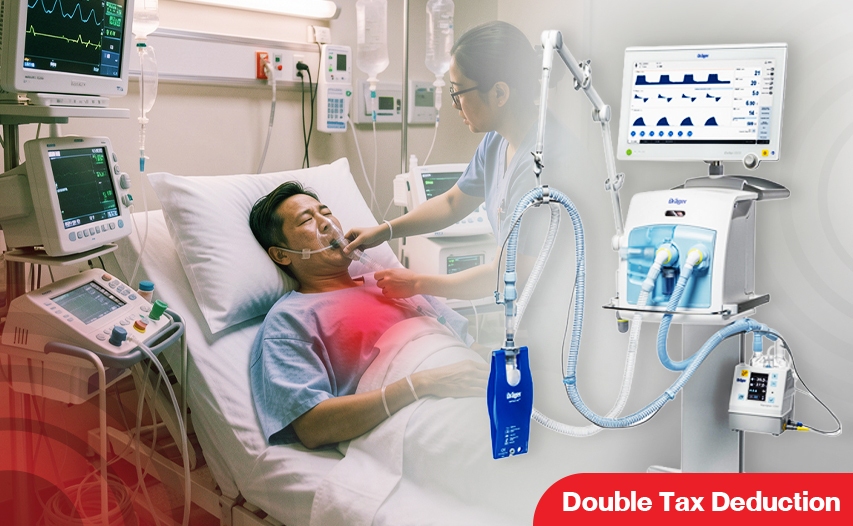
Procurement of ventilators for critical care patients.
 13/02/2026 - 13/02/2027


King
Chulalongkorn Memorial Hospital provides specialized care for critical and
complex cases from across the nation, serving over 1,500,000 outpatients
annually. With a capacity of over 1,400 beds and numerous
specialized wards covering diverse medical disciplines, the hospital serves as
a primary referral center for patients nationwide. Many of these patients face
life-threatening respiratory crises, including:
·
Severe Respiratory Patients: Individuals
suffering from severe pneumonia or infections leading to pulmonary edema (fluid
in the lungs) or pulmonary empyema (pus in the lungs). This also includes
chronic obstructive pulmonary disease (COPD) patients experiencing acute
exacerbations where they can no longer oxygenate their blood sufficiently.
·
Critical Trauma Victims: Patients with
chest injuries, such as multiple rib fractures that puncture the lungs or
internal bleeding in the pleural cavity, causing respiratory failure. This also
includes brain injury patients; when the brain's respiratory center is
affected, the body may "forget" how to breathe or develop dangerously
irregular breathing patterns.
·
Neonates and Pediatric Patients: Premature
infants whose lungs are not yet fully developed. Specialized neonatal
ventilators are delicate and vital tools for saving these young lives. It also
includes children with congenital conditions, such as heart disease, that
impair respiratory function.
·
Neuromuscular Disease Patients: Those with
conditions like Myasthenia Gravis or ALS. When the muscles used for breathing
weaken, patients can lose consciousness due to lack of oxygen. It also includes
patients with spinal cord injuries whose nerve signals can no longer reach the
diaphragm.
·
Post-Major Surgery Patients: Following
heart, lung, or lengthy abdominal surgeries, patients often haven't fully
recovered from anesthesia or remain too weak to breathe independently during
the critical first 24–48 hours.
A ventilator acts as a 100%
replacement for the natural breathing mechanism. It sustains vital signs and
maintains blood gas balance at the safest levels, adjusting oxygen
concentration from 21% to 100% based on each patient's specific needs.
Thai Red Cross
Society invites you to be a vital force in donating toward the procurement
of ventilators for critical care patients. These units will be installed in
inpatient wards to enhance the life-saving capabilities of King Chulalongkorn
Memorial Hospital. Even when a patient’s body cannot move so much as a fingertip,
this equipment acts as a "backup lung," working with precision
24 hours a day to ensure every cell receives oxygen while waiting for the day
the patient can breathe on their own again.
Because every donation you make... is a backup lung that sustains life in times of crisis
 2,519
2,519
 121 day